
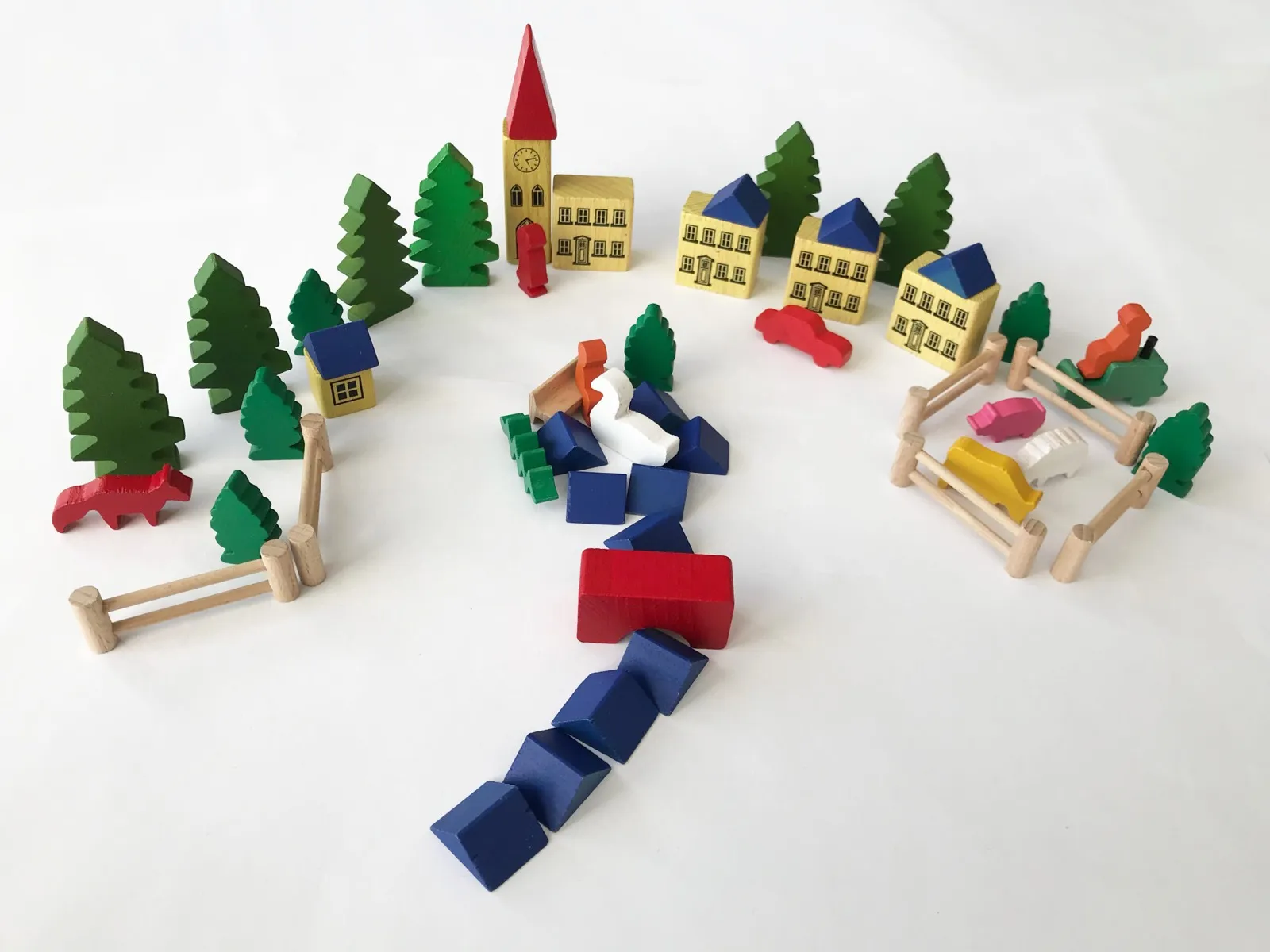
How does the World Game test work?
- 01
The setup
The session is one-to-one in a quiet room, the practitioner sitting opposite the child. All the wooden pieces (houses, trees, animals, people, vehicles, fences and building material) are tipped onto the table in a single heap, and the practitioner names each kind.
- 02
The child builds a village
The child is asked to build a village, and even without a spoken instruction will start building. It takes about five to fifteen minutes. There is generally no talking; the practitioner notes the start and end time and observes what happens, without steering.
- 03
The child tells about it
Once the village is finished, the child may talk about what they built. This, along with how the building went, is noted. The session in the room is then complete.
- 04
A second build, two weeks later
To see whether what showed up is structural rather than a one-off, the child builds a village again about two weeks later. The two builds together are what make the picture reliable.
- 05
Summarise and report back
Afterwards, the villages are assessed with standardised notation and score forms for cognition, thinking preference and wellbeing. The results are reported back to the parents, the school or the child themselves.
A deep dive into the World Game
A non-verbal educational tool developed to understand children's cognitive and social-emotional development.
Watch films & interviewsWhat does the World Game tell you?
A built village gives insight into three different aspects:
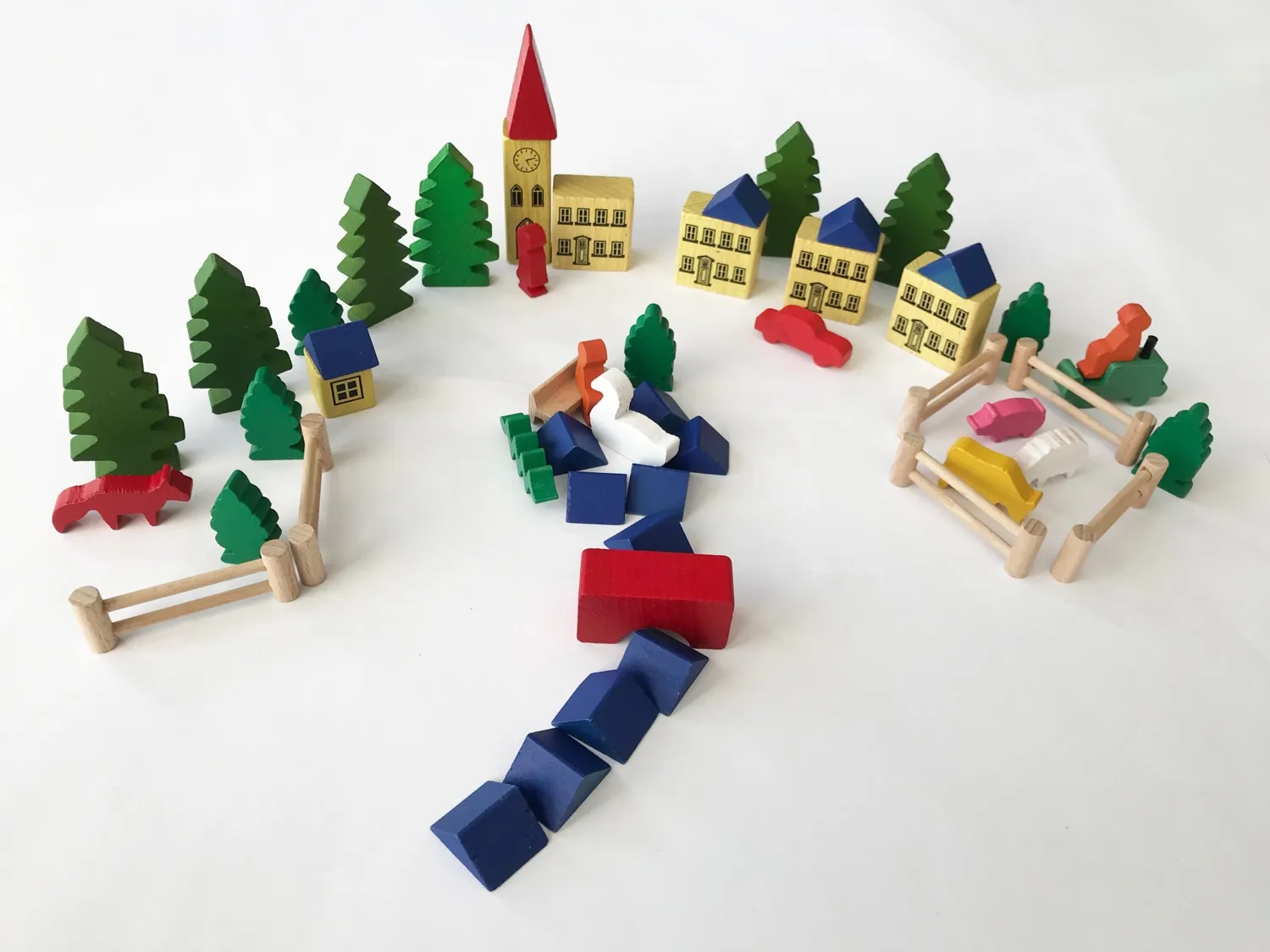
How does the child explore the world around them?
Structure, reasoning and abstraction, including hidden potential and (high) giftedness.
How does the child handle their world?
Learning style and thinking preference (visual-spatial and/or verbal-sequential), and the conditions a child needs to thrive.
How does the child experience their world?
Relationships, communication, inner tensions and any blocks that hinder behaviour and wellbeing.
Why it works
Non-verbal
No reading, writing or explaining. Language and literacy are never a barrier. The World Game is suitable for all ages, backgrounds and languages.
Projective
The child unconsciously places their inner world on the table. Unlike regular tests, this cannot be practised or steered.
For everyone
Especially revealing with giftedness, neurodiversity and children who speak another language.
Evidence-based
A researched test with roots going back to 1911, refined by professionals over the past century.
The World Game and its significance in assessing giftedness
This video features a discussion between Grith Tschorn and Dr. Linda Silverman about the World Game and its significance in assessing giftedness.
Watch films & interviewsWho it is for
The World Game is used by psychologists, therapists, teachers and other professionals who work with young people in a practice, organisation or school.
- Gifted and twice-exceptional children
- Children with a neurodivergent brain (dyslexia, autism, ADHD)
- Children with a communication block
- Situations where a fresh, non-verbal picture can help
Experience it yourself.
Find a certified professional near you, or learn to work with the World Game yourself.